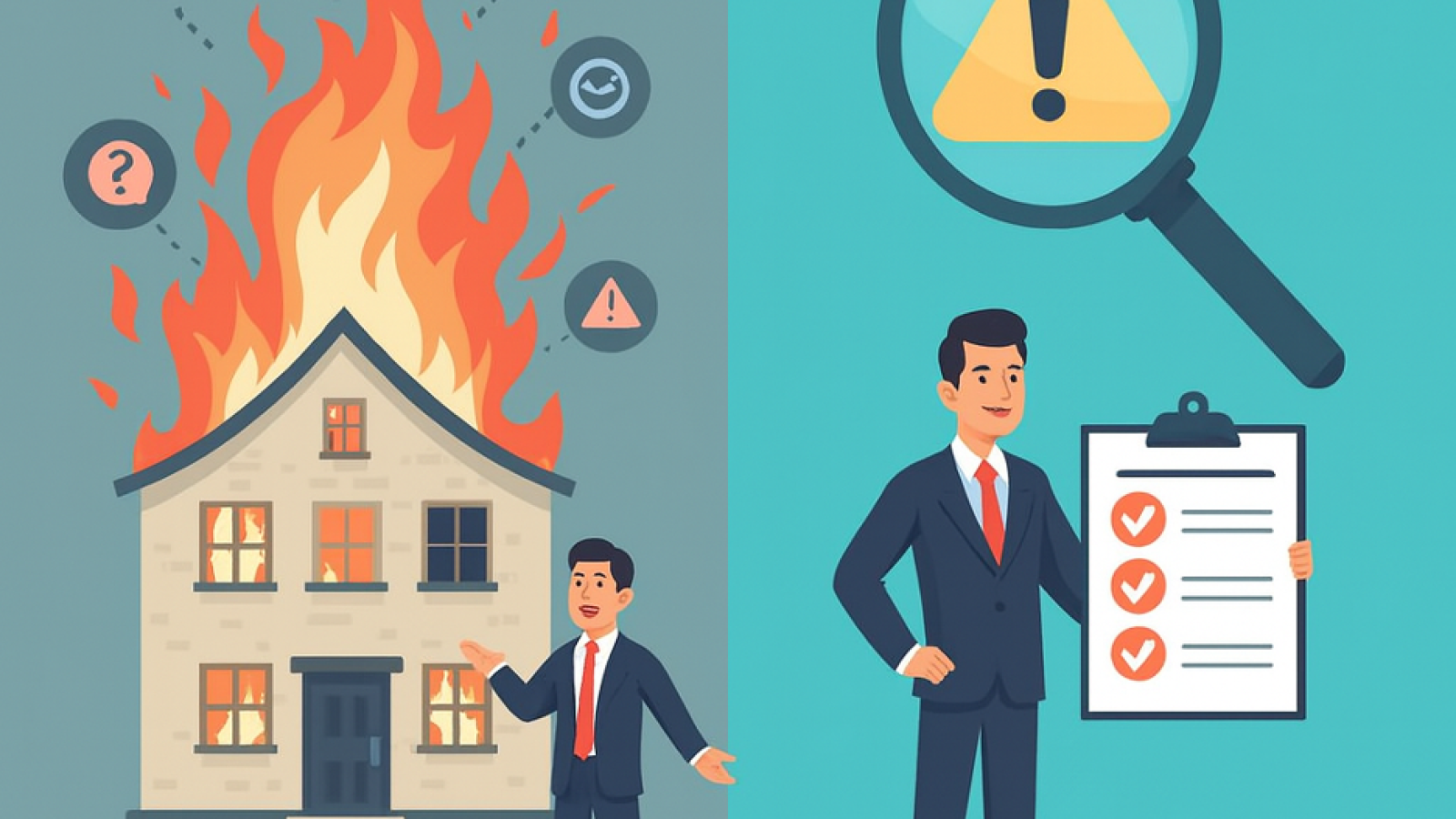
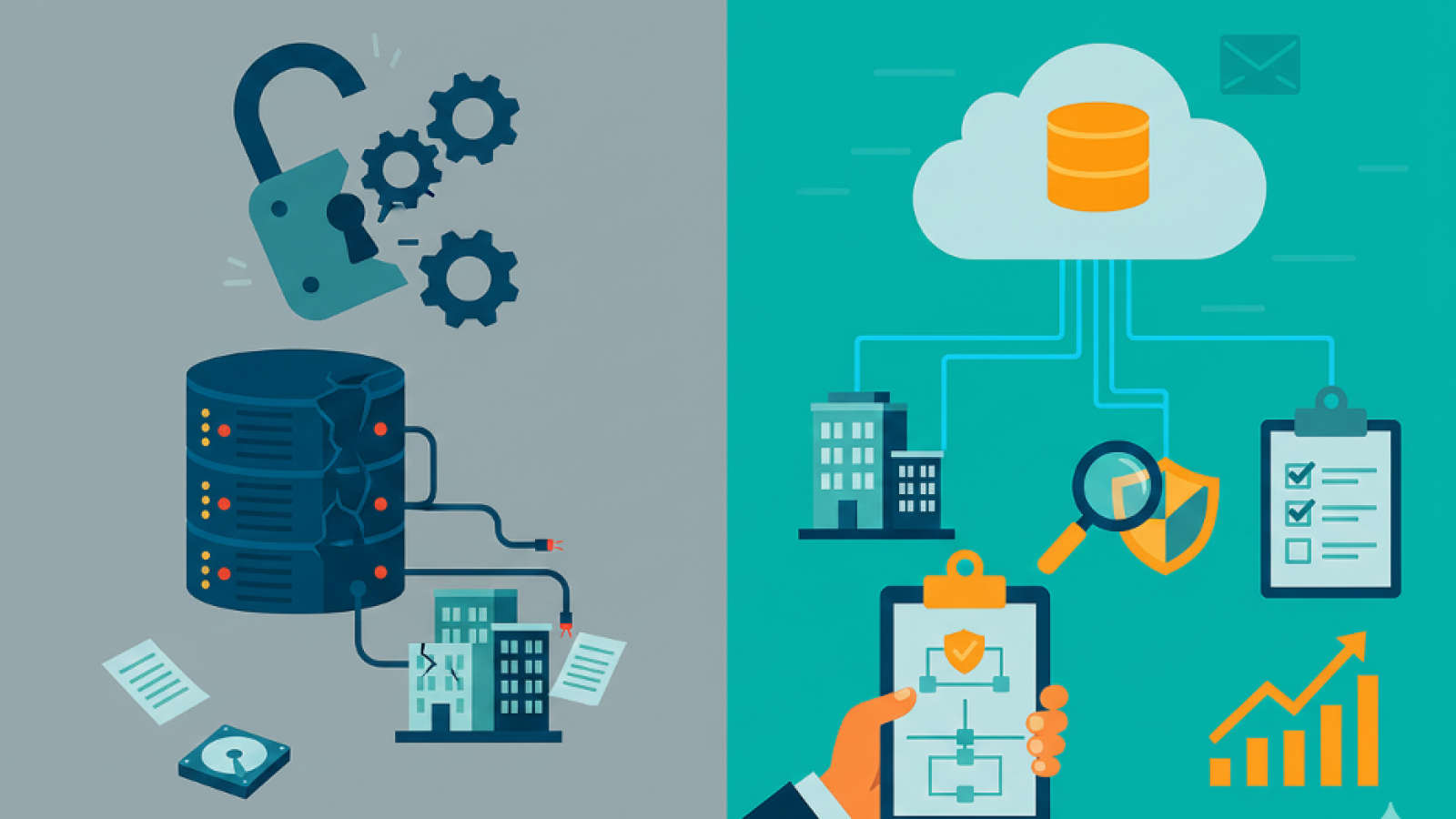
Risk management isn’t just about ticking boxes. It’s about uncovering vulnerabilities that could disrupt operations, damage reputation, or drain resources. Yet many organizations struggle to capture the full spectrum of risks in a concise and actionable format. A structured, component-based one-page checklist brings clarity, helping teams move from vague concerns to quantifiable, prioritized action.
The Challenge: Missing Critical Risk Factors
Organizations often underestimate or mismanage risk assessments. Common pitfalls include:
Focusing only on IT or financial risks while ignoring operational, reputational, or compliance exposures.
Overlooking interdependence such as vendor reliability, third-party systems, and supply chain fragility.
Failing to quantify risks, leaving executives without clear prioritization or impact visibility.
Ignoring long-term implications like regulatory penalties, customer churn, and brand damage.
Our Solution: The 60-Second Risk Assessment Checklist (with Component Breakdown)
To streamline evaluation and ensure nothing slips through, focus on three primary categories: each broken down into measurable components.
Category 1: Operational Risks
Components to Evaluate:
Component
What to Look For
Process Reliability
Identify bottlenecks, single points of failure, manual dependencies.
Cost escalations, budget shortfalls, ROI uncertainties.
Long-Term Growth Alignment
Are risks blocking innovation, scalability, or expansion plans?
This ensures long-term threats don’t quietly sabotage future growth.
Why Choose Abtech for Risk Assessment
Abtech simplifies risk management by delivering a structured, one-page, component-rich checklist that captures the essentials in under 60 seconds. Beyond the checklist, we provide tailored mitigation strategies – from cybersecurity resilience to compliance audits ensuring your organization is equipped for both immediate threats and long-term challenges. With Abtech, risk assessment becomes a proactive engine of resilience and confidence.
Introduction: Beyond the Basics: Secure the Right Partner
Choosing a Managed Service Provider (MSP) isn’t just about comparing prices or checking who has the flashiest service catalog. The real challenge is finding a partner who aligns with your business goals, compliance requirements, and long-term resilience. A structured, component-based RFP checklist helps you filter out weak contenders and focuses only on providers who deliver measurable value.
The Challenge: Overlooking Critical Evaluation Points
Organizations often struggle to evaluate MSPs effectively. Common pitfalls include:
Focusing only on cost while ignoring quality, scalability, or security maturity.
Overlooking hidden risks such as weak data protection, vague SLAs, or poor incident response.
Ignoring cultural fit communication style, transparency, and proactive support.
Missing long-term value drivers such as automation, innovation roadmaps, and strategic alignment.
Our Solution: The 60-Second MSP RFP Checklist (with Component Breakdown)
To streamline vendor evaluation, focus on three primary categories, each broken into structured components you can measure.
Category 1: Service Delivery & SLAs
Components to Evaluate:
Component
What to Look For
Uptime Guarantees
Minimum 99.9% uptime, financial-backed SLAs.
Incident Response Times
Clear timelines for critical, high, medium, and low incidents.
Escalation Path
24/7 escalation structure with named contacts.
Service Reporting
Monthly/weekly dashboards, performance summaries, and trend analysis.
Service Desk Quality
Multi-channel support (email, portal, phone), ticket closure metrics.
This category ensures operational stability and predictable performance.
Category 2: Security & Compliance
Components to Evaluate:
Component
What to Look For
Certifications
ISO 27001, SOC 2 Type II, GDPR/HIPAA where applicable.
Data Protection
Encryption (in transit + at rest), access controls, retention policies.
This ensures the MSP can grow with the business instead of holding it back.
Why Choose Abtech for MSP Selection
Abtech simplifies the RFP process with a structured, component-rich checklist that highlights the essentials in under 60 seconds. Beyond the checklist, we guide you through vendor comparison, risk scoring, and long-term alignment. With Abtech, MSP selection becomes a confident, data-backed decision transforming procurement into a foundation for resilience and scalable growth.
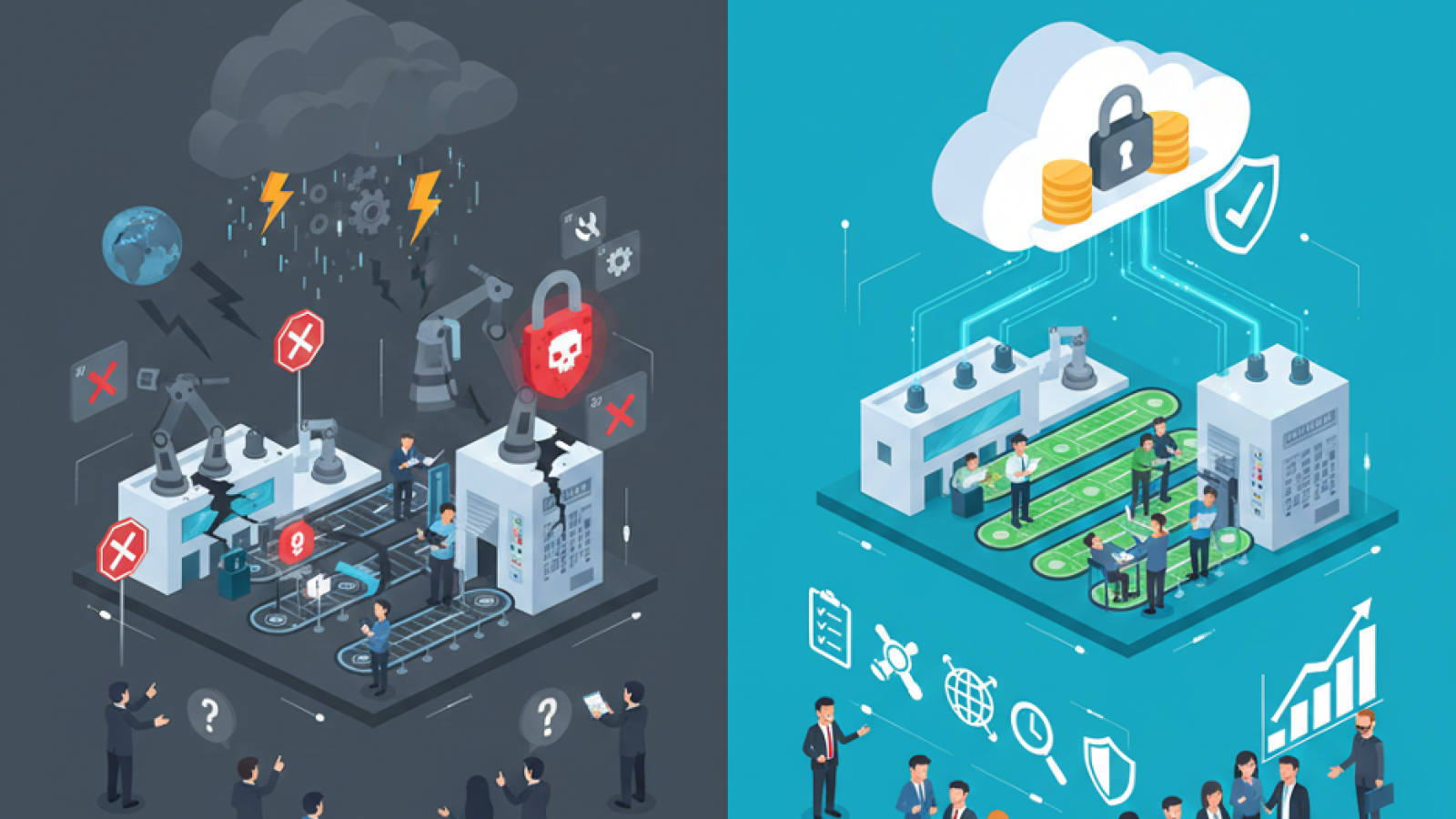
Manufacturers depend on continuous operations across supply chains, production lines, and logistics systems. Abtech’s MSP-driven backup and disaster recovery ensures uptime, data integrity, and resilience against disruptions.
The Challenge: Manufacturing IT Risks
High vulnerability to production system downtime and operational interruptions
Growing cyber threats targeting ICS, SCADA, and other industrial control environments
Increasing complexity and interdependencies across global supply chains
Strict compliance demands across ISO, NIST, ITAR, and other manufacturing standards
Our Solution: Abtech’s Manufacturing Resilience
Industrial System Backup: Protect ERP, MES, and ICS/SCADA data with secure, consistent backup policies.
Disaster Recovery for Production Lines: Rapid failover capabilities to keep production operations running with minimal interruption.
Supply Chain Continuity: Maintain data integrity and operational continuity across global supply chain systems.
Compliance & Security Integration: Meet manufacturing compliance standards through automated audits, reporting, and security controls.
Measurable Impact
Reduce downtime across production environments with fast, reliable recovery
Strengthening supply chain resilience through consistent data protection and continuity planning
Lower operational risks and unexpected costs through proactive protection and recovery readiness
Why Choose Abtech Technologies
Abtech delivers resilient, secure, and compliant backup and disaster recovery solutions designed for manufacturers, ensuring operational continuity, reduced risk, and sustained global competitiveness.
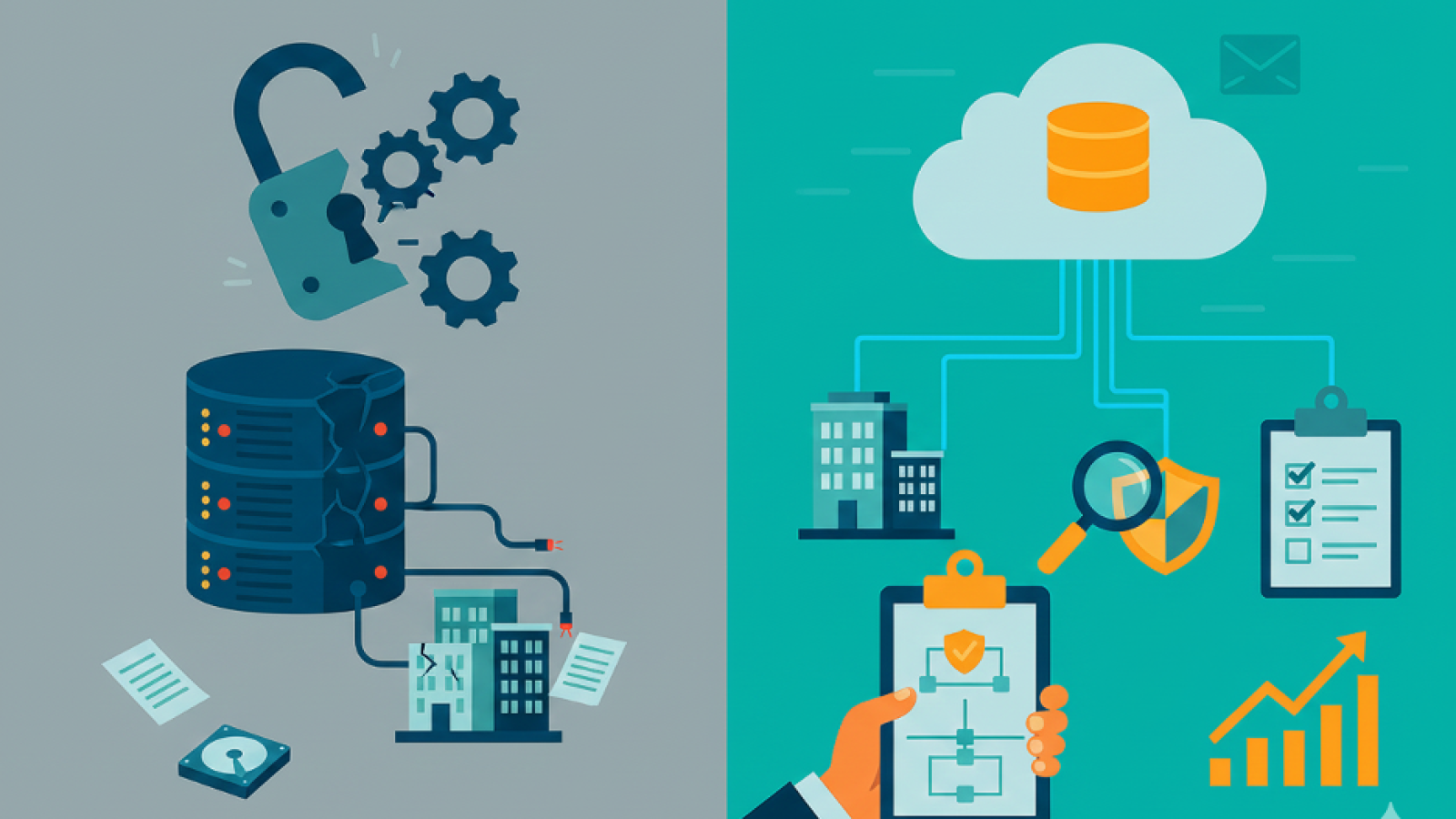
In the financial sector, every second of downtime can translate into lost revenue, regulatory penalties, and diminished trust. A modern MSP-driven backup and disaster recovery strategy ensures that critical systems remain resilient, secure, and compliant.
The Challenge: Risks in Financial IT Operations
High regulatory pressure (PCI-DSS, SOX, GDPR)
Increased exposure to ransomware, fraud attempts, and targeted cyberattacks
Complex hybrid ecosystems combining legacy platforms with modern cloud systems
Demands for zero data loss and rapid, predictable recovery
Our Solution: Abtech’s Finance-Focused Resilience
Continuous Backup & Archiving: Protect financial data with continuous or near-real-time replication to prevent loss.
Compliance-Ready Reporting: Automated audit trails and compliance reporting for regulators and stakeholders.
Rapid Recovery Playbooks: Minimize downtime with validated disaster recovery runbooks and response playbooks.
Cybersecurity Integration: Integrate backup with advanced threat detection, monitoring, and prevention tools.
Measurable Impact
Achieve zero data loss requirements for critical financial systems
Reduce compliance risk with automated reporting and consistent protection policies
Strengthen customer trust by ensuring secure, reliable financial services
Why Choose Abtech Technologies
Abtech delivers secure, compliant, and resilient backup solutions tailored for financial institutions, ensuring uninterrupted operations and customer confidence.
Introduction: Beyond Regulation: Engineering Trust in Healthcare IT
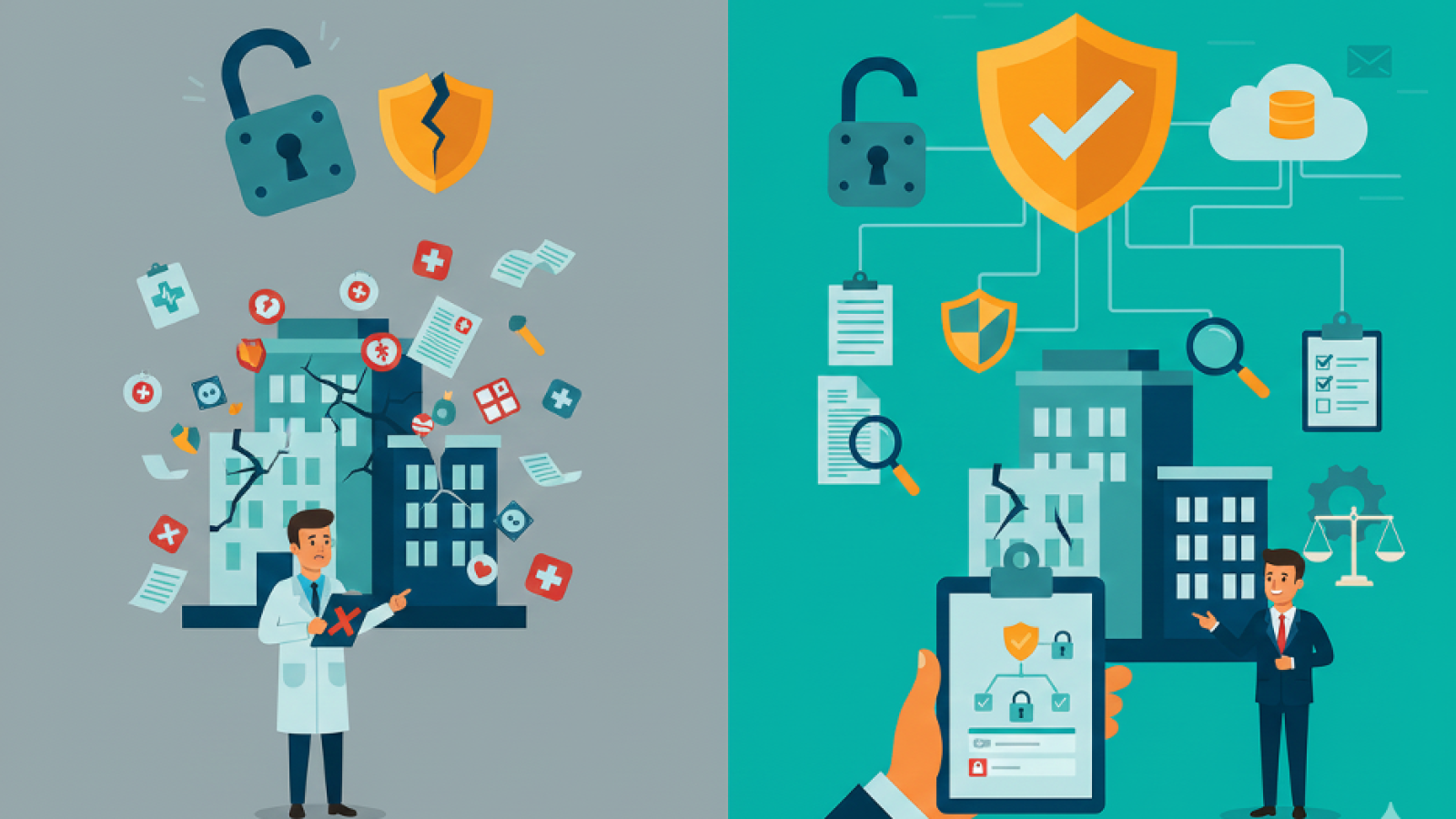
In healthcare, compliance is more than a legal requirement, it’s the foundation of patient trust. HIPAA mandates strict safeguards for protecting sensitive health information, but many organizations struggle to balance compliance with operational efficiency. A HIPAA compliance company ensures that healthcare providers, insurers, and business associates can deliver care securely, confidently, and in full alignment with regulatory standards.
The Challenge: Hidden Risks in Healthcare Compliance
Healthcare organizations face unique challenges in safeguarding patient data. Common pitfalls include:
Fragmented IT systems spread across hospitals, clinics, and external partners
Uneven enforcement of access controls and incomplete audit trails
High exposure to ransomware, phishing, and insider threats aimed at PHI
Manual reporting processes that strain staff and slow operations
Limited proactive oversight to identify and resolve compliance risks early
Our Solution: Abtech’s HIPAA Compliance Framework
Abtech Technologies delivers a comprehensive compliance program that integrates security, automation, and governance. Our approach ensures healthcare organizations meet HIPAA requirements while maintaining operational resilience. Key components include:
Risk Assessment & Gap Analysis: Identify vulnerabilities and compliance gaps across IT systems and workflows.
Automated Compliance Monitoring: Continuous auditing of access activity, configuration changes, and data flows against HIPAA requirements.
Secure Backup & Disaster Recovery: Ensure PHI is encrypted, replicated, and rapidly recoverable in the event of a breach or outage.
Policy & Procedure Development: Establish clear, enforceable guidelines for workforce compliance and data handling.
Training & Awareness Programs: Equip staff with actionable training to prevent violations and reinforce a strong security culture.
Incident Response & Reporting: Implement rapid response playbooks that contain incidents quickly and ensure timely, compliant reporting.
Measurable Impact & Key Outcomes
Reduced Compliance Risk: Lower exposure to regulatory penalties, breaches, and reputational impacts.
Operational Efficiency: Automate audits and reporting to free staff for higher-value clinical priorities.
Resilient Data Protection: Protect PHI with integrated, secure backup and disaster recovery capabilities.
Enhanced Patient Trust: Reinforce your commitment to privacy and security, strengthening long-term patient confidence.
Regulatory Confidence: Maintain audit-ready documentation and continuous monitoring for full regulatory preparedness.
Why Choose Abtech Technologies for HIPAA Compliance
Abtech Technologies specializes in delivering secure, compliant, and resilient IT solutions for healthcare organizations. Our HIPAA compliance services go beyond checklists; we engineer trust by integrating advanced monitoring, automated reporting, and resilient data protection into every layer of your infrastructure. By partnering with Abtech, healthcare providers gain a trusted advisor who not only ensures regulatory adherence but also empowers them to deliver care securely, confidently, and without interruption.
Why Choose Abtech Technologies for HIPAA Compliance Abtech Technologies delivers secure, compliant, and resilient IT solutions built specifically for healthcare organizations.
Introduction: Beyond Service: Ensuring Public Trust
Government agencies must deliver uninterrupted services while protecting sensitive citizen data. Abtech’s MSP-driven backup and disaster recovery solutions provide resilience, compliance, and transparency.
The Challenge: Government IT Risks
Strict and evolving compliance mandates including CJIS, FedRAMP, GDPR, and state-specific requirements
Increasing cyber threats targeting public infrastructure and essential services
Legacy systems that lack modern resilience, scalability, and security features
Growing requirements for transparency, auditability, and public accountability
Our Solution: Abtech’s Government Resilience
Secure Data Backup: Protect sensitive citizen data, agency records, and mission-critical systems.
Disaster Recovery Readiness: Ensure continuous delivery of essential public services through validated DR strategies.
Compliance & Audit Automation: Automate compliance reporting and audit documentation for oversight agencies.
Hybrid Infrastructure Support: Modernize legacy systems and support hybrid environments through secure cloud integration.
Measurable Impact
Strengthening public trust through secure, reliable, and uninterrupted services
Reduce exposure to cyber threats and operational disruptions
Lower operational costs through proactive protection, automation, and reduced downtime
Why Choose Abtech Technologies
Abtech empowers government agencies with secure, complaint, and resilient backup solutions that protect public trust and ensure uninterrupted service delivery.
Introduction: Beyond Recovery: Engineering True Data Resilience
For midsize businesses, data is the lifeblood of operations. Yet many organizations still rely on aging, fragmented, or incomplete backup approaches that can’t keep pace with modern risks or operational demands. Real resilience requires more than reactive recovery, it requires proactive protection, compliance alignment, and a strategy built to support long-term growth.
The Challenge: Hidden Risks in Traditional Backup Approaches
Midsize businesses often face unique challenges balancing cost, complexity, and reliability. Common pitfalls include:
Dependence on manual backup processes prone to human error
Minimal insight into whether backups are healthy, complete, or recoverable
Fragmented protection across hybrid and SaaS environments
Compliance requirements that become harder to meet without automated, audit-ready reporting
No meaningful connection between backup and disaster recovery, creating costly continuity risks
Our Solution: Abtech’s Managed Backup Service
Abtech Technologies delivers a comprehensive, enterprise-grade managed backup service designed specifically for midsize businesses. Our approach integrates automation, intelligent monitoring, and expert support to make data protection effortless and dependable.
Key features include:
Automated Backup & Recovery: Replace manual tasks with policy-driven, automated backups across on-prem, cloud, and hybrid systems.
Cloud-Integrated Protection: Secure, scalable cloud integration that grows with your business.
Continuous Monitoring & Reporting: Real-time visibility, proactive alerts, and automated compliance reporting ensure full transparency.
Disaster Recovery Readiness: Backup and DR planning work hand-in-hand to minimize downtime and accelerate full restoration.
Expert Management & Support: Leverage 24/7 expert oversight, troubleshooting, and optimization from Abtech’s technical team.
Measurable Impact & Key Outcomes
Reduced Downtime: Faster, predictable recovery after an incident.
Lower Operational Burden: Free your IT team from low-value backup work so they can focus on strategic priorities.
Compliance Confidence: Automated, audit-ready reports make regulatory adherence far easier.
Cost Optimization: Reduce the financial risk of data-loss events and eliminate emergency recovery costs.
Strengthened Customer Trust: Demonstrate reliability and operational maturity to clients and partners.
Why Choose Abtech Technologies for Managed Backup
Abtech Technologies delivers secure, scalable, compliance-ready backup services purpose-built for midsize organizations. We ensure your critical data is continuously protected, monitored, and fully recoverable without adding operational burdens.
A Business Continuity Plan (BCP) is no longer a compliance checkbox, it’s a survival strategy. From cyberattacks to power outages, any disruption can halt productivity, damage reputation, and impact revenue. In 2025, a BCP must go beyond backups to include proactive risk assessment, data recovery, and communication workflows that ensure the organization can function under pressure.
1. Define Critical Business Functions
Start by identifying which operations are essential to your business’s survival. Ask:
Which systems must remain online?
What processes can tolerate short interruptions?
Who needs access first during recovery?
These answers guide your continuity priorities.
2. Assess Risks and Dependencies
Not all threats are equal. Classify them into:
Physical risks: fire, flood, power outage
Digital risks: ransomware, data corruption
Human risks: key staff unavailability
Mapping dependencies between systems ensures that recovery efforts address cause and effect, not just symptoms.
3. Establish RTOs and RPOs
Define two critical metrics:
RTO (Recovery Time Objective): How long can operations be down?
RPO (Recovery Point Objective): How much data loss is acceptable?
Abtech’s StorTrust DRaaScan achieve sub-hour RTOs and near-zero RPOs for mission-critical workloads.
4. Create a Communication Plan
During disruption, clarity saves time. Define who communicates with employees, customers, and partners. Include backup contact methods and escalation procedures.
5. Test, Review, Improve
A BCP that isn’t tested isn’t ready. Regular disaster recovery tests expose weaknesses, validate RTOs, and build staff confidence. Testing should occur at least twice per year and after major system changes.
Continuity planning isn’t just IT’s job. Finance, HR, and leadership must align to ensure resilience supports organizational goals, not just compliance checklists.
Conclusion
An effective BCP is proactive, tested, and aligned with business priorities. In an unpredictable world, the ability to recover quickly defines competitive advantage.
About Abtech Technologies
Abtech Technologies designs and manages complete business continuity and disaster recovery solutions through its StorTrust DRaaS platform. Our engineers build customized recovery strategies, test them regularly, and integrate them into Managed IT Services for seamless resilience.
When your production line stops, the clock starts ticking—and not just on lost production hours. Every minute of downtime cascades into delayed shipments, frustrated customers, idle workers, and eroded profit margins. For midsize manufacturers, a single unexpected outage can cost anywhere from $10,000 to $250,000 per hour, depending on the operation.
Yet here’s the paradox: while most manufacturing leaders understand downtime is expensive, few can quantify exactly how expensive—or more importantly, which specific IT failures are driving the biggest losses.
The Real Price of Downtime Goes Beyond the Obvious
Most manufacturers track direct production losses when systems go down. But the true cost includes:
Immediate Impact:
Lost production output and revenue
Wasted raw materials mid-process
Hourly workers standing idle but still on payroll
Ripple Effects:
Rush shipping costs to meet commitments
Overtime expenses to catch up on missed production
Quality control issues from rushed recovery procedures
Long-Term Damage:
Customer confidence erosion leading to lost contracts
Reputation damage in tight-margin industries
Increased insurance premiums after major incidents
A recent industry analysis found that unplanned downtime costs manufacturers an estimated $50 billion annually—with 70% of that coming from preventable IT-related failures.
Why Traditional IT Approaches Fall Short
Many manufacturers inadvertently sabotage their own uptime through common but counterproductive approaches:
The Hardware-Only Trap: Investing in premium servers and storage while ignoring the operational processes that actually trigger most outages. New equipment doesn’t prevent human error, misconfigured systems, or inadequate monitoring.
The Reactive Cycle: Waiting for failures to occur, then scrambling to fix them. This approach guarantees maximum disruption and trains your team to fight fires instead of preventing them.
The Budget Paradox: Viewing IT as a cost center to be minimized rather than a production enabler to be optimized. This leads to underfunded monitoring, deferred maintenance, and accumulated technical debt that eventually fails catastrophically.
The Vendor Sprawl Problem: Accumulating disconnected solutions from multiple vendors over time, creating complexity that itself becomes a source of failure and inefficiency.
A Systematic Framework for Measurable Improvement
Reducing downtime by 40% isn’t about magic—it’s about applying systematic improvements across four critical areas, each delivering specific, measurable results.
1. Predictive Monitoring and Early Detection (15% reduction)
Instead of discovering problems when users call to report an outage, intelligent monitoring identifies warning signs hours or days in advance.
How it works:
Real-time tracking of system health metrics across all critical infrastructure
Automated alerts when patterns indicate potential failures
Machine learning that identifies anomalies before they cascade into outages
Real-world example: A metal fabrication company detected unusual storage array behavior on a Friday afternoon. The alert allowed technicians to schedule a controlled maintenance window over the weekend instead of experiencing an unplanned outage during Monday’s production shift. Estimated prevention: 6 hours of downtime avoided.
When incidents do occur, having documented, tested response procedures cuts recovery time dramatically.
Key elements:
Step-by-step incident response playbooks for common scenarios
Clear escalation paths and decision trees
Automated initial response actions that begin recovery before humans are even notified
The difference: Without procedures, your team spends valuable time figuring out what to check, who to call, and what to try. With playbooks, they execute a proven process immediately. This typically reduces mean time to recovery from hours to minutes.
3. Automated Failover and Recovery (8% reduction)
Modern infrastructure can automatically detect failures and switch to backup systems faster than any human operator.
Implementation strategies:
Redundant systems with automatic failover for critical applications
Regular automated backup testing to ensure recovery actually works
Cloud-based disaster recovery that activates within minutes
Critical insight: Most backup systems are never tested until disaster strikes—when it’s too late to discover they don’t work. Automated testing and recovery closes this dangerous gap.
That server running Windows Server 2008 or that industrial control system from 2005? They’re not just old—they’re ticking time bombs.
The legacy problem:
Outdated systems fail more frequently and unpredictably
Security vulnerabilities create ransomware and breach risks
Finding parts and expertise becomes progressively harder
Interoperability issues with modern software create integration failures
Strategic replacement: Rather than wholesale replacement projects, target the specific legacy components causing the most frequent issues. This surgical approach delivers ROI quickly while building toward full modernization.
Beyond Downtime: The Cost Optimization Opportunity
Here’s where most manufacturers miss a crucial insight: the same systematic approach that reduces downtime also significantly cuts IT operational costs.
Infrastructure Consolidation Midsize manufacturers often run 3-5x more servers and storage than necessary due to accumulated sprawl over time. Modern virtualization and cloud technologies can consolidate workloads, reducing hardware, power, cooling, and maintenance costs by 30-50%.
Automation of Routine Tasks Your IT staff shouldn’t spend hours each week on manual backup verification, patch deployment, or system health checks. Automation eliminates this labor while improving consistency and reliability.
Vendor and License Optimization Most organizations are paying for software licenses they don’t use, maintenance contracts they don’t need, and vendor services that overlap. A thorough audit typically identifies 15-25% in immediate savings.
The Double Win: When you reduce downtime and cut operational costs simultaneously, the ROI becomes compelling. Many manufacturers see payback periods under 12 months.
Tying IT Decisions to Production Outcomes
The most successful manufacturers don’t treat IT as a separate function—they integrate it directly into production planning and performance measurement.
Strategic alignment looks like:
Tracking uptime as a core manufacturing KPI alongside throughput and quality
Mapping IT investments to specific production improvements
Calculating the production value of IT initiatives (not just the IT cost)
Including IT resilience in operational risk management
Example calculation: If your average hourly production value is $50,000, and you invest $200,000 in IT improvements that prevent even 4 hours of downtime annually, you’ve broken even—and every additional hour prevented is pure value creation.
Getting Started: The 60-Day Roadmap
Achieving 40% downtime reduction doesn’t require years of effort. Here’s a practical 60-day starting framework:
Days 1-15: Assessment
Catalog all critical systems and their actual downtime over the past year
Identify your top five causes of unplanned outages
Calculate the true cost per hour of downtime for your operation
Days 16-30: Quick Wins
Implement basic monitoring for critical systems lacking it
Document emergency response procedures for your most common failures
Test your backup and recovery processes
Days 31-45: Strategic Improvements
Deploy automated alerting and early warning systems
Identify your highest-risk legacy systems and plan their replacement
Implement automated failover for your most critical applications
Days 46-60: Optimization
Review and renegotiate vendor contracts
Automate routine IT tasks consuming staff time
Measure results and refine your approach
Why Partner with Specialists
While the framework is straightforward, execution requires specialized expertise most manufacturers don’t maintain in-house. The right partner brings:
Experience across multiple implementations: They’ve already solved the problems you’re encountering for the first time
Vendor relationships and leverage: Better pricing, faster support escalation, and inside knowledge
Dedicated focus: Your internal IT team runs operations; specialists focus exclusively on optimization
Measurable accountability: Clear metrics and committed outcomes, not just effort
Most importantly, the right partner quantifies results in production terms—not IT jargon—so you can make informed investment decisions.
Why Choose Abtech Technologies for Manufacturing IT Resilience
Since 1989, Abtech Technologies has specialized in helping midsize manufacturers and local government organizations maximize uptime while controlling IT costs. We understand that your business isn’t about IT—it’s about production, customer commitments, and profitability. That’s why we speak in production terms, not IT jargon.
What sets us apart:
Complete IT Lifecycle Support: Unlike vendors who only sell hardware or only provide monitoring, we deliver end-to-end solutions from initial IT infrastructure design through ongoing management, protection, and optimization. When you work with Abtech, you have one trusted partner for all your IT needs—eliminating vendor finger-pointing and integration headaches.
Manufacturing-Specific Expertise: We’ve worked with manufacturers long enough to understand that your IT requirements are fundamentally different from retail, healthcare, or professional services. Production systems can’t wait for business hours support. Quality systems need guaranteed uptime. ERP and MRP systems are mission-critical. We design and support IT infrastructure with these realities baked in.
Measurable, Production-Focused Results: We don’t just promise better uptime—we quantify it in terms that matter to your business. How many production hours saved? What’s the ROI in prevented downtime? How does this impact your customer commitments? Every recommendation ties directly to your operational goals.
One-Stop-Shop Convenience: As a Dell Platinum Partner with comprehensive managed services capabilities, we handle everything from hardware procurement to cloud disaster recovery to 24/7 monitoring and support. This means you deal with one vendor, one contract, one throat to choke when issues arise, and one partner invested in your long-term success.
Service-First Culture: Our business model depends on your production staying up and running. We succeed when you succeed. That alignment means we’re proactive about preventing issues, responsive when problems occur, and constantly looking for ways to improve your resilience and reduce your costs.
The Bottom Line
Reducing downtime by 40% while cutting IT operational costs isn’t aspirational—it’s achievable through systematic application of proven techniques. The question isn’t whether this level of improvement is possible, but rather how quickly you’ll implement it before your competitors do.
In industries where margins are tight and customer relationships are everything, IT resilience isn’t a luxury—it’s a competitive necessity. The manufacturers thriving in today’s environment have moved beyond viewing IT as a cost center and recognize it as a production enabler, risk reducer, and competitive differentiator.
The real question: Can you afford not to optimize?
If you are ready to discuss how we can achieve this for your organization, click the link below and we will be happy to assist.
Q: How much does manufacturing downtime cost per hour? A: Manufacturing downtime costs can range from $10,000 to $250,000 per hour depending on the operation size and industry, including direct production losses, labor costs, and downstream impacts.
Q: What causes most manufacturing IT downtime? A: 70% of manufacturing downtime comes from preventable IT-related failures including inadequate monitoring, lack of response procedures, legacy infrastructure, and insufficient backup systems.
Q: How quickly can manufacturers reduce downtime? A: With a systematic approach, manufacturers can achieve measurable downtime reduction within 60-90 days, with full 40% reduction typically realized within 6-12 months.
Q: What is predictive monitoring in manufacturing? A: Predictive monitoring uses real-time system health tracking and machine learning to identify potential failures before they cause outages, typically preventing 15% of downtime incidents.
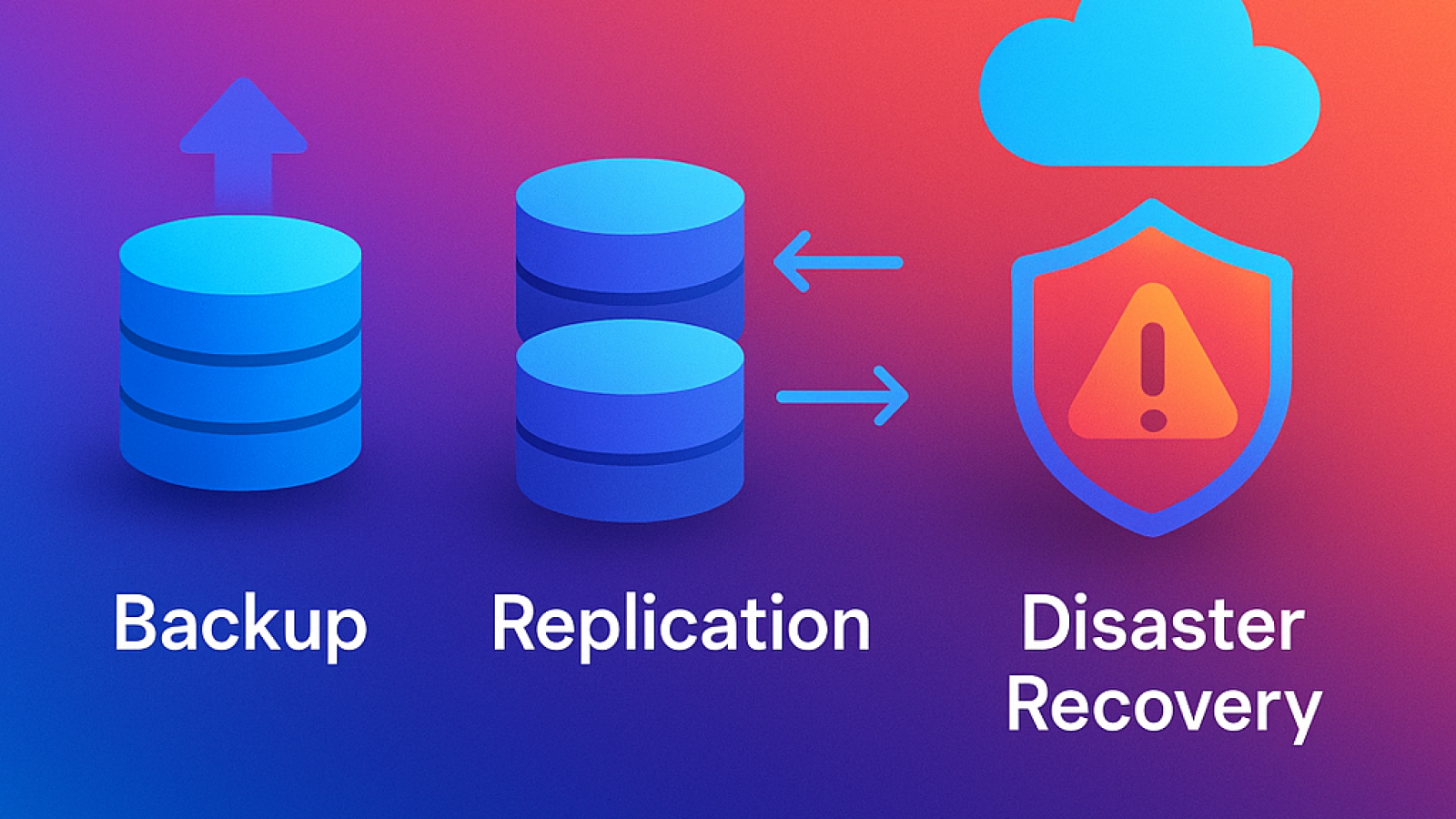
Many organizations believe they’re protected because they back up their data but backup alone doesn’t guarantee business continuity. In a major outage, recovery time is just as critical as data preservation. Understanding the difference between backup, replication, and disaster recovery helps IT leaders plan for every scenario.
1. Backup: The First Line of Defense
Backups create static copies of files or systems that can be restored after a failure. They are ideal for data archiving and compliance but are not optimized for rapid recovery. Restoring terabytes of data from cold storage can take hours or days.
2. Replication: The Real-Time Mirror
Replication continuously synchronizes active workloads to a secondary site often in the cloud. If one server fails, another is ready to take over immediately. This minimizes data loss but requires careful orchestration and testing to ensure systems stay in sync.
3. Disaster Recovery: The Complete Strategy
Disaster Recovery (DR) combines backup and replication into an automated framework that restores full business operations not just data. It ensures applications, user access, and dependencies all resume seamlessly after a disruption.
A layered approach ensures resilience against hardware failure, cyberattacks, and natural disasters.
6. Compliance and Testing
Many regulations, HIPAA, SOC 2, ISO 27001, require not just backups but proof of recoverability. Testing disaster recovery plans quarterly ensures compliance and real-world readiness.
Conclusion
Backup protects your data; disaster recovery protects your business. By combining the two with real-time replication, you achieve a true continuity strategy that withstands any disruption.
Shopping Basket
Manage Cookie Consent
To provide the best experiences, we use technologies like cookies to store and/or access device information. Consenting to these technologies will allow us to process data such as browsing behavior or unique IDs on this site. Not consenting or withdrawing consent, may adversely affect certain features and functions. Abtech Technologies Privacy Policy
Functional
Always active
The technical storage or access is strictly necessary for the legitimate purpose of enabling the use of a specific service explicitly requested by the subscriber or user, or for the sole purpose of carrying out the transmission of a communication over an electronic communications network.
Preferences
The technical storage or access is necessary for the legitimate purpose of storing preferences that are not requested by the subscriber or user.
Statistics
The technical storage or access that is used exclusively for statistical purposes.The technical storage or access that is used exclusively for anonymous statistical purposes. Without a subpoena, voluntary compliance on the part of your Internet Service Provider, or additional records from a third party, information stored or retrieved for this purpose alone cannot usually be used to identify you.
Marketing
The technical storage or access is required to create user profiles to send advertising, or to track the user on a website or across several websites for similar marketing purposes.